Maintaining Artificial Turf in Florida: Oak Leaves, Pollen, and Summer Storms
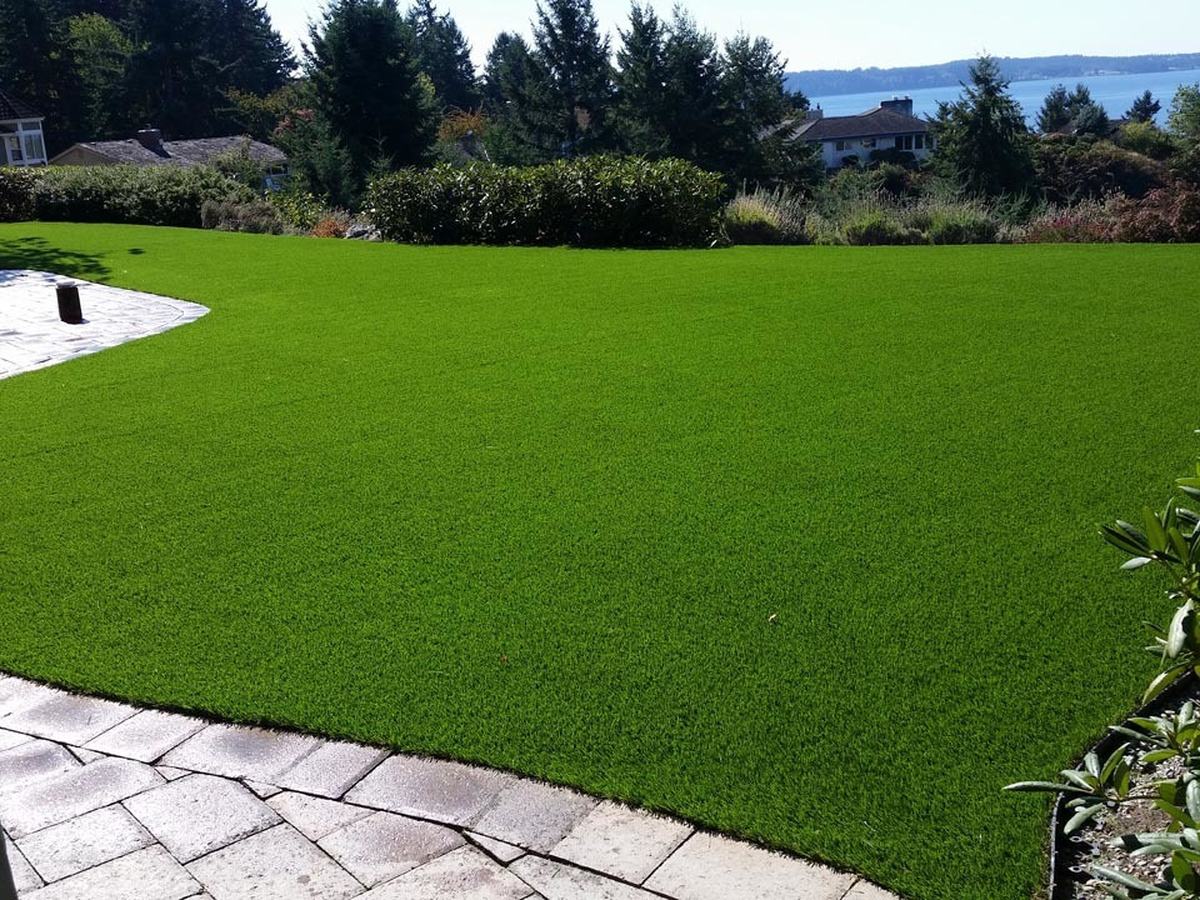
A turf lawn asks for a fraction of what a St. Augustine lawn does — no mowing, watering, fertilizing, or pest treatment — but it isn't zero. Here's the routine we give every Tampa Bay client, organized by the seasons that actually matter here.
Spring: the oak season
Tampa's live oaks drop their leaves in February and March and follow with weeks of pollen and catkins. This is the one time of year turf needs regular attention. Blow or rake debris off weekly while the oaks are shedding — organic matter that sits in the pile holds moisture, breaks down, and eventually clogs the infill. A leaf blower is the right tool; a stiff push broom works for small areas.
Summer: storms and heat
Afternoon storms are mostly a benefit — rain flushes dust, pollen, and pet residue through the system. After a heavy storm, check that water is draining and not pooling anywhere; a low spot that holds water after a properly built install is rare, but it's worth catching early. On the hottest weeks, a quick evening hose rinse cools the surface for the next morning. Hurricane season: blow off debris after any storm, and check the perimeter edges — a correctly fastened lawn won't move, but a fallen branch can scuff a seam.
Fall and winter: the easy season
Occasional debris removal. Brush high-traffic areas — the path to the gate, the dog's patrol route — once or twice to stand the fibers back up. This is a good time for a power broom on a larger lawn.
Year-round
- Pet areas: pick up solids as you would on grass, rinse periodically in the dry season, and use an enzyme turf cleaner monthly in peak summer. Once a year, a professional power broom and enzyme flush resets a heavily used dog yard — ask us about it.
- Spills: most rinse out with water. Grease and sunscreen come up with mild dish soap.
- Weeds: a properly built base with a weed barrier rarely grows anything, but wind-blown seeds can sprout in accumulated debris at the edges. Pull them; don't spray.
- Infill: it settles over years. If a high-traffic area starts to look flat or a putting green slows down, a top-up restores it.
What to avoid
Don't park anything hot on it — grills, fire pits, reflected sun off a low-E window can melt fibers. Don't pressure-wash at close range. And don't let anyone talk you into "fertilizing" turf.
That's the whole routine. Most Tampa homeowners spend less time on their turf in a year than they used to spend on their lawn in a month.
Evolution Pro Turf
Tampa Bay's artificial turf specialists — the synthetic grass division of Evolution Professional Pavers, building outdoor spaces across Florida since 2014.
Planning a artificial grass lawns project?
Get a free on-site consultation and estimate from Tampa Bay's artificial turf specialists.